Scope
Restorations and components, clearly separated
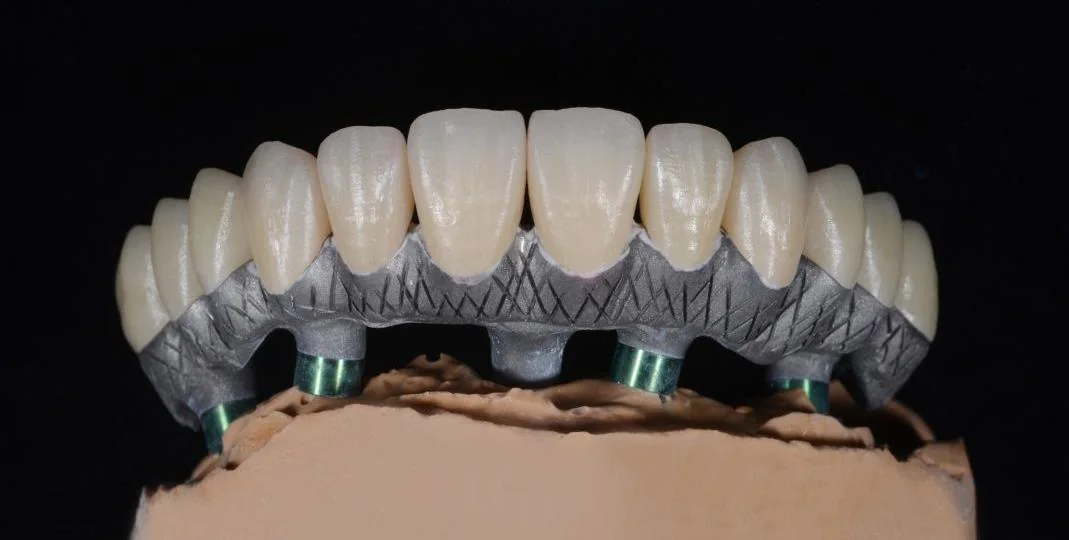
The TeeX catalogue lists implant bridges and crowns, bar and overdenture components, custom abutments and screws, and implant guide plates. Confirm the exact component set for the prescribed case.
- Implant-supported crown and bridge cases
- Titanium bar and overdenture-related components
- Custom abutment and guide-plate enquiries
Production
Digital design matched to the component
Company materials show CAD/CAM design, a Co-Cr laser-printing example, milled titanium bridge examples and custom abutment cutting. These are different production paths rather than one process for every implant case.
- Identify the proposed material and component
- Review the design route and any required approval
- Confirm the final component specification before manufacture
Case brief
Details that shape an implant enquiry
Share the clinician-approved restorative plan and the records needed to evaluate the proposed work. Confirm interfaces and accepted data formats with TeeX rather than assuming compatibility.
On this page / Case brief
- Restoration type and implant system or interface details
- Scan or model records, component list and material requirements
- Design approval contact and intended destination
Clinical boundary
Keep planning and production responsibilities distinct
The catalogue also includes surgical guide plates and an immediate-loading product category. The treating clinician remains responsible for diagnosis, implant placement and suitability of any clinical protocol.
- Agree the approved design and requested fabrication scope
- Check available product-specific documentation
- Confirm delivery, remake and other order terms per case
For dental professionals. The prescribing clinician determines clinical indications and approves the treatment plan. Product specifications, documentation and order terms should be confirmed for each case.